Posts

ENGLISH - THE FUNNIEST LANGUAGE

Image
ENGLISH THE FUNNIEST LANGUAGE We will begin with BOX and the plural is BOXES But the plural of OX should be OXEN and not OXES. Then one fowl is GOOSE but two are GEESE Yet the plural of MOUSE should never be MEESE. You may find a lone MOUSE or a whole set of MICE But the plural of HOUSE is HOUSES not HICE. If the plural of MAN be always MEN Why shouldn’t the plural of PAN be PEN? If I speak of a FOOT and then you show me your FEET And I give you a BOOT, would a pair be called BEET? If one is TOOTH, and a whole set is TEETH Why should not the plural of BOOTH be BEETH? Then one may be THAT and three may be THOSE Yet HAT in the plural would never be HOSE And the plural of CAT is CATS not COSE. We speak of a BROTHER and also a BRETHREN But alothough we say MOTHER we never say MOTHREN. Then the masculine pronouns are HE, HIS and HIM But imagine the feminine SHE, SHIS and SHIM. So, English, I fancy, you will agree, is the FUNNIEST LANGUAGE you ever did see! - Leo Angela Rupert

Spoken English Exercises - Family Tree & Dialogue Patterns

Image
Spoken English Exercises Family Tree Dialogue Patterns

Spoken English Exercises - Answer these Questions

Image
Spoken English Exercises Answer these Questions MY PROFILE I’m / My name is : .............................................. I’m : ...................................................years old. My date of birth is : ........................................... I go to school. Its name is : ................................ My favourite teacher is : .................................... My favourite lecturer is : .................................... I like : ............................................................... I love : .............................................................. My favourite hobby is : ...................................... My favourite book is : ....................................... My favourite actor is : ....................................... My favourite actress is : .................................... My favourite colour is : ..................................... My favourite shade is : ...................................... My favourite flower is : ....

Plain English - The Simplest English

Image
Learning Plain English Teaching and learning English is a ‘Million Dollar Industry’ today. Whatever we learn at the so called elite institutions of English Language Teaching (ELT) becomes stale and archaic. Many times we fail to use appropriate words to suit the occasion. Roundabout way of speaking, use of complex and compound sentences become obstacles in understanding the speech or writing. We can use simple and plain language to avoid such cumbersome sentences. The Plain Language Commission and the Plain Language Network, the Plain Language Association International (1993) are advocating the use of simple language. Their members include professionals who plan, write, design, and create communications projects to better serve the needs of the public, clients, customers, professionals, students and teachers. They work for all kinds of organizations — government departments, financial services companies, registered social organizations, regulators, ombudsmen, local authorities, pensio...

Language Laboratory for learning Spoken and Written English

Image
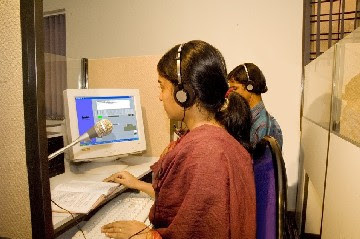
Language Laboratory for learning Spoken and Written English Language Labs have come back! From LKG, UKG classes to PG classes all the schools, colleges, universities, professional training institutes, soft skill training academies should have Language Labs. Multipurpose Language Labs are being established in many residential schools and colleges. All you have to do is to tune in your Radio, TV, or Tape Recorder to make an ‘Audio Lab’. Audio - Visual Aids like VCD, DVD, MP3 Players, Projectors help you to establish an ‘Audio-Visual Lab’. A Multi-Media Computer with recording facilities makes a ‘Computer Language Lab’. Mobile Phones, I-Pods, Laptops, Palmtops, PDAs serve as Labs. Spoken and Written English, Language (SOFT) Skills, Parts of Speech, Vocabulary, Tense, Voice, Speech, Dialogues, Composition exercises can be learnt without much efforts at the Language Lab. You can have your own Laptop Multipurpose Multimedia Mobile Language Lab, if you spare a part of your income. Now, visi...

KIM'S GAME - ARTICLE BY BEDRE MANJUNATH

Image
KIM’S GAME Hello Friends! Do you know ‘Mowgli’ the jungle boy and the ‘Jungle Book’? Do you like the adventures of Mowgli? Well, it is written by Rudyard Kipling. Many of the works of Kipling are meant for children. He has designed many games for them. If you are a Boy Scout or Girl Guide you have all the chances of playing the ‘Kim’s Game’. This is a very popular game with Girl Guides. What is Kim’s Game? ‘Kim’s Game’ is an exercise used to develop a person’s capacity to observe and remember specific details. The name is derived from Rudyard Kipling’s novel Kim. Kim is the story of the orphan son of an Irish soldier in India who grew up among the native boys and was later trained for government intelligence work. The training began by showing Kim a tray of precious stones and gems for a minute’s observation, then covering it, and asking Kim how many stones and what kind they were. At first Kim could remember only a few, but soon, by practice, he was able not only to say exactly how m...

250,00,00,000 Words in English Language!

Image
250,00,00,000 Words in English Language! How many words are there in English Language? If you just ask this simple question, surely you will get a variety of answers. A recent survey says that there are 250,00,00,000 Words! All these words are found in a corpus. What is a corpus? A corpus is a collection of texts of written (or spoken) language presented in electronic form. It provides the evidence of how language is used in real situations, from which lexicographers can write accurate and meaningful dictionary entries. The Oxford English Corpus The Oxford English Corpus is at the heart of dictionary-making in Oxford in the 21st century and ensures that we can track and record the very latest developments in language today. The Oxford English Corpus is central to the process and to Oxford’s £35 million research programme - the largest language research programme in the world. The Oxford English Corpus is a text corpus of English language used by the makers of the Oxford English Dictio...